A warm welcome back to the 8th edition of our grain storage feature. After looking at fitting the cover at the end of last year in our last newsletter series, this month we are moving into sealing the bunker!
Grain Bunker Storage Part 8: Sealing and Fumigating the Bunker
Sealing the Bunker
Sealing the bunker is an important part of the process to protect the stored grain from insects. Bunkers with a top and bottom sheet are an effective storage solution with an air-tight seal, making fumigation possible and very successful.
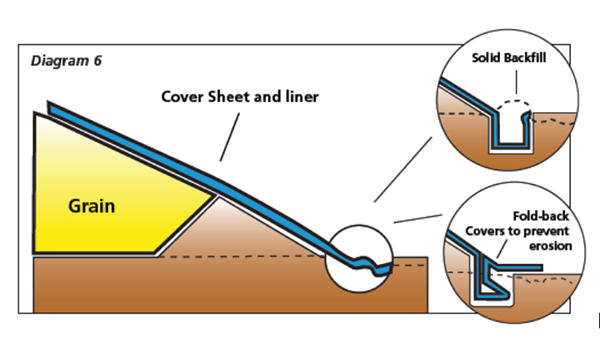
Several methods for achieving a good seal are available. The simplest, most successful and most universally used method requires both the top and bottom covers to extend beyond the wall be secured together to form a seal.
In the case of an earthen wall bunker, these top and bottom sheets need to extend about 1m beyond the base of the wall. The edges are buried in a previously dug trench about 300-400mm deep at the base of the wall – as shown below:
Cement and tin walls will be equipped with a tarp and ground sheet securing mechanism on the side of the wall, allowing both to be clamped together to provide the required seal.
Fumigating the Bunker
Fumigation is effective in a bunker as dispersal of the fumigant is assisted by the movement of the flexible top sheet, caused by the wind. Fumigation apparatus such as blankets or trays are inserted under the top sheet and then re-sealed. The formulation should not be placed under a very tight section of the sheet as the gas needs to disperse away from the tablets or blanket. The spent blanket or powder can then be removed 3-4 weeks later without the grain being contaminated.
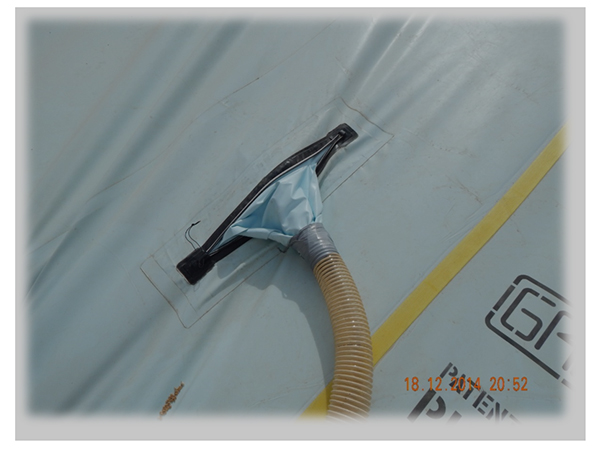
For piped gas fumigant systems such as HD Gassing, the use of a GrainSafe access point makes this process easy and straight-forward.
This unique patented product is utilized for HD gassing allowing bunkers to be gassed without the expensive investments in bulkhead gassing systems in the wall of the bunker. The GrainSafe zipper comes fitted with a unique sleeve / nozzle underneath the zipper. When the zipper is opened the HD gas pipe is fitted into the sleeve and taped around allowing the gassing to be completed quickly and efficiently through to access point. The sleeve is sized so to also allow for the grain to still be easily accessible for grain sampling and testing.
Besides removing the need for expensive investments in the bulkhead systems, it additionally means that bunkers with earthen walls can also be gassed in the same manner.
A final note, it is advisable to have the area fenced, perhaps a temporary electric fence around the bunker if there is any likelihood of animals foraging near the bunker.
So now we have the bunker filled and sealed, next month we will jump into 'Unloading and Removing the Grain'.
We hope it find this helpful; it’s just one of the things we do to give our customers the service they expect! Stay safe.
Check out our Grain Bunker Tarps here!
Need accessories to install or repair your grain bunker tarp?