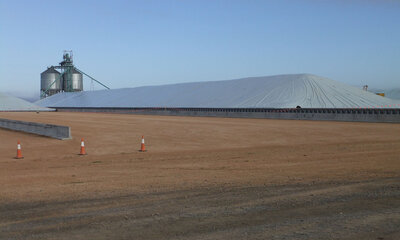
When preparing a grain bunker, there’s a lot to think about - the pad, the bunker size, the cover, filling and sealing. It can be easy to overlook the groundsheet, but it plays an important role in protecting your grain from moisture and helping create an effective seal.
With harvest approaching, it’s worth taking a few minutes to check your groundsheet and make sure you’re set up before the first load of grain arrives.
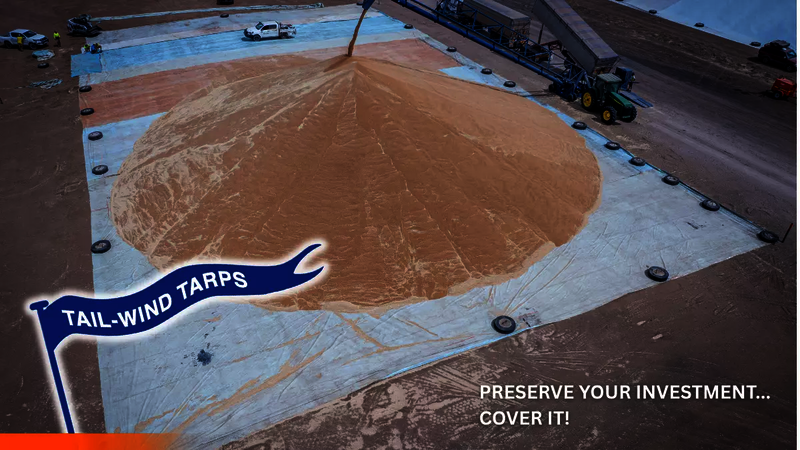
Managing Groundsheets
Start with a good surface
The condition of the pad underneath the groundsheet is important. Make sure the surface is clean, reasonably smooth and free from anything that could damage the fabric, such as sharp stones or other debris.
If you’re using your groundsheet from last season, now is a good time to inspect it for any existing damage. Small tears or damaged areas are much easier to repair before the bunker is filled.
Allow enough excess
The groundsheet needs to extend beyond the footprint of the grain stack. This excess is important when it comes to sealing the bunker and getting an effective seal around the edges.
If you don't have a wall, it can also be useful to mark the groundsheet where the edge of the grain needs to stop. This gives you a simple guide during filling and helps prevent the grain being pushed too far towards the edge.
Keep it secure during filling
Once the groundsheet is down, take care not to unnecessarily damage it with machinery or excess equipment movement.
Wind can also be an issue when the groundsheet is laid out and waiting for filling to begin. Positioning concrete-filled truck tyres around the perimeter can help hold the groundsheet in place and reduce the risk of wind getting underneath and tearing or moving it.
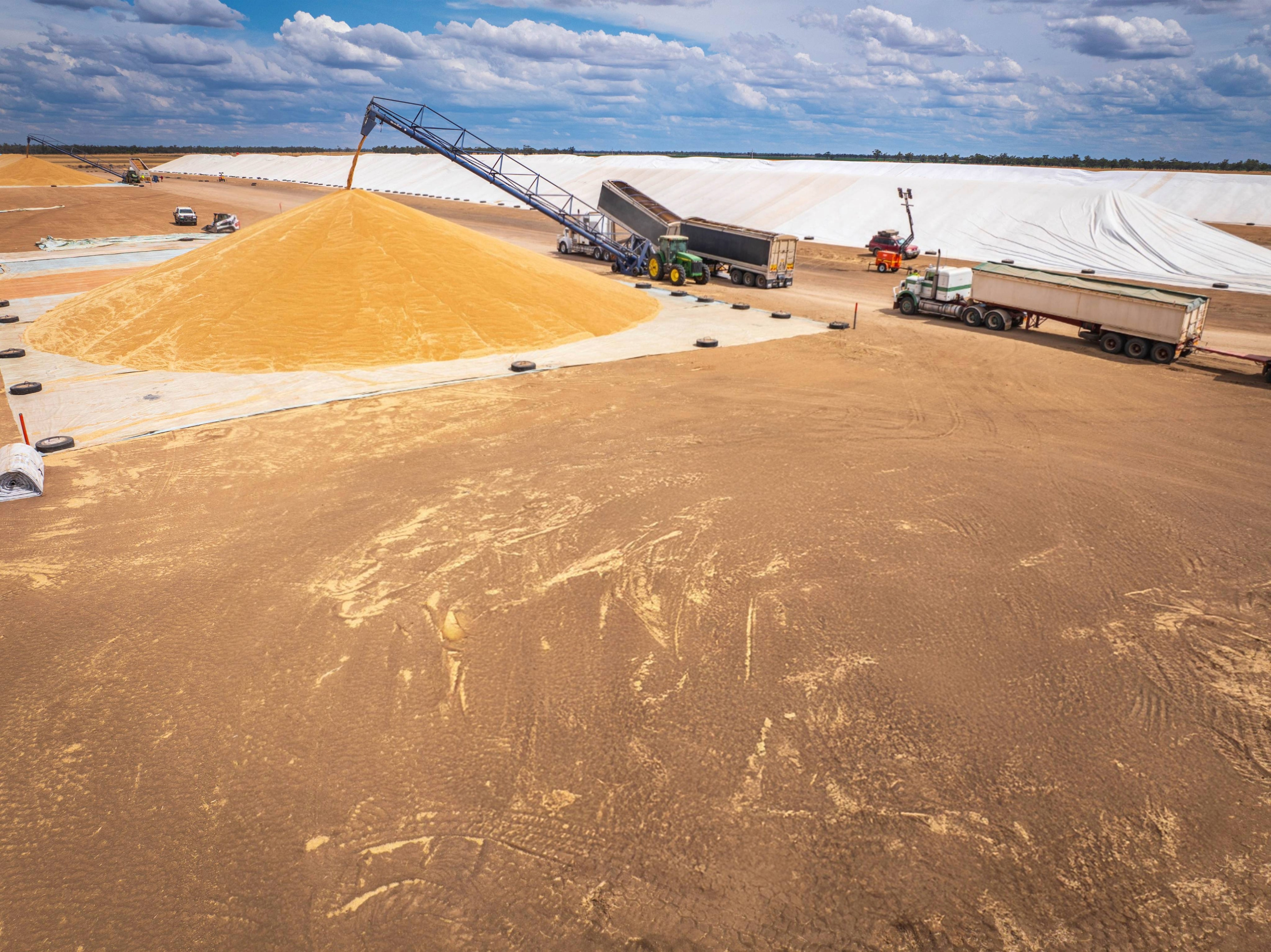
Getting the seal right
The groundsheet and bunker cover work together as part of the overall sealing system.
Make sure the groundsheet is positioned correctly around the grain stack before securing the bunker cover.
A good seal starts with good preparation.
Keep an eye on it during storage
Once the bunker is sealed, it’s easy to assume everything will stay exactly as it was. However, checking the bunker periodically is important, particularly after significant weather.
Addressing a small issue early can help prevent a bigger problem later.
A few minutes now can save a problem later
Your groundsheet is an important part of your grain storage system. Taking the time to inspect it, prepare the pad, position it correctly and protect it during filling can help ensure your bunker is ready for harvest and properly sealed once the grain is in.
For more practical information on planning, filling, sealing and managing a grain bunker, take a look at our Grain Storage Guide.
Download our Grain Storage Guide for practical information on preparing your bunker pad and planning your grain storage

Access our Grain Bunker Calculator
Need help to plan, prepare and calculate your grain storage accurately? Use our online grain bunker calculator to work this all out with ease in just a few simple steps!