
Welcome to the 6th edition of our grain storage feature. This month we are back to jump into the action-packed part of bunker process – filling the bunker!
It’s this stage, where you see all the grain coming in, that makes all the preparation and set-up work prior all worth it.
Grain Bunker Storage Part 6: Filling the Bunker
A Common-Sense Process
The bunker is simply filled by dumping grain from a truck or bin into an auger located mid-way between the side walls or edge of the pad. As the bunker fills, the auger is progressively moved towards the open end, taking care not to tear the ground sheet if one has been used.
By moving the auger progressively back, the grain peak should be a uniform height along its full length and the correct height to suit the distance between your walls (as outlined in Edition 2 of this series).
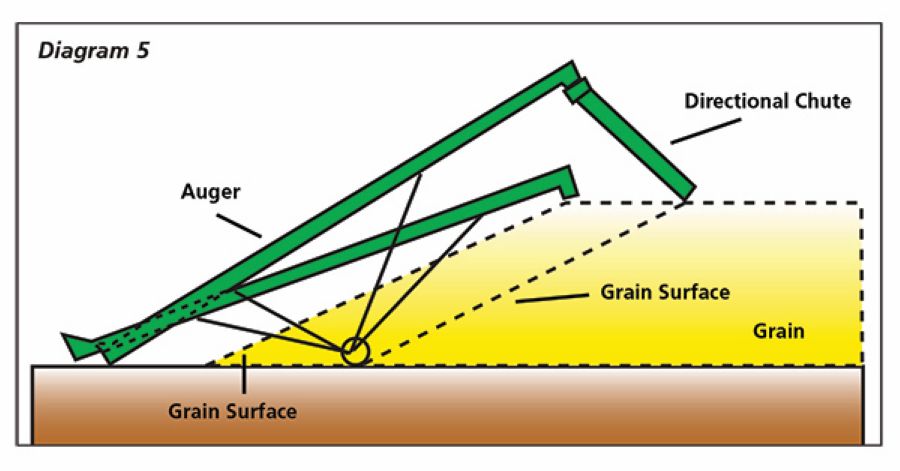
Often a directional chute attached to the auger outlet is used as it is a valuable tool when filing the bunker. It directs the grain further away from the auger outlet and allows for greater height to be reached before burying the undercarriage (shown in the illustration).
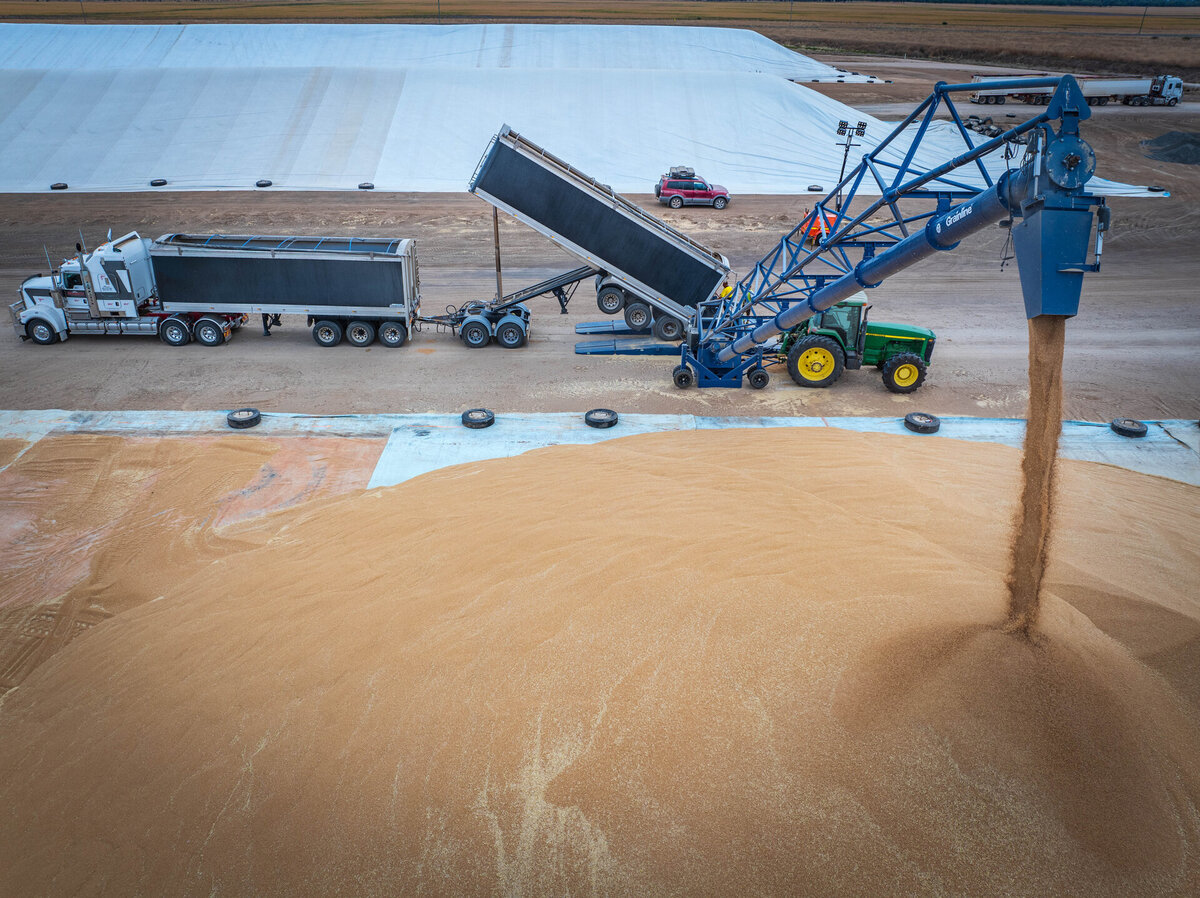
Grain is in-loaded until flush with the side walls to form a smooth even surface free from depressions, so that water can run freely off the cover and away from the bunker. Once the bunker is filled and ready for covering, it may be necessary to hand-trim the stack before covering to avoid depressions in the grain mass or along the top of the wall where rain may otherwise collect.
If the weather is fine with no outlook of rain, it is a good idea to leave the stack a day or two to allow the grain to settle prior to covering.
Another note here, grain should not be stored at greater than 12% moisture content, otherwise losses are likely to occur.
So now we have the grain in the bunker and ready to cover, stay tuned for next months edition with all the information about fitting the cover!
We hope it find this helpful; it’s just one of the things we do to give our customers the service they expect!
Check out our Grain Bunker Tarps here!
Need accessories to install or repair your grain bunker tarp?