Once your grain bunker is filled, getting the cover into position is the next important step.
Large bunker covers can be heavy and awkward to handle, but with the right approach and equipment, installation can be made much more manageable.
We've put together a few practical tips to help you pull your bunker tarp over efficiently, minimise handling and protect your cover during installation.
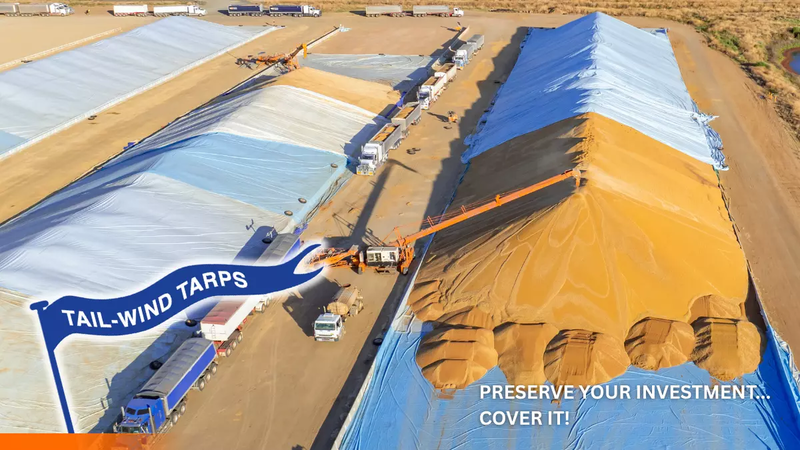
5 Tips for Pulling a Bunker Cover on Safely and Efficiently
1. Start by unrolling the cover correctly
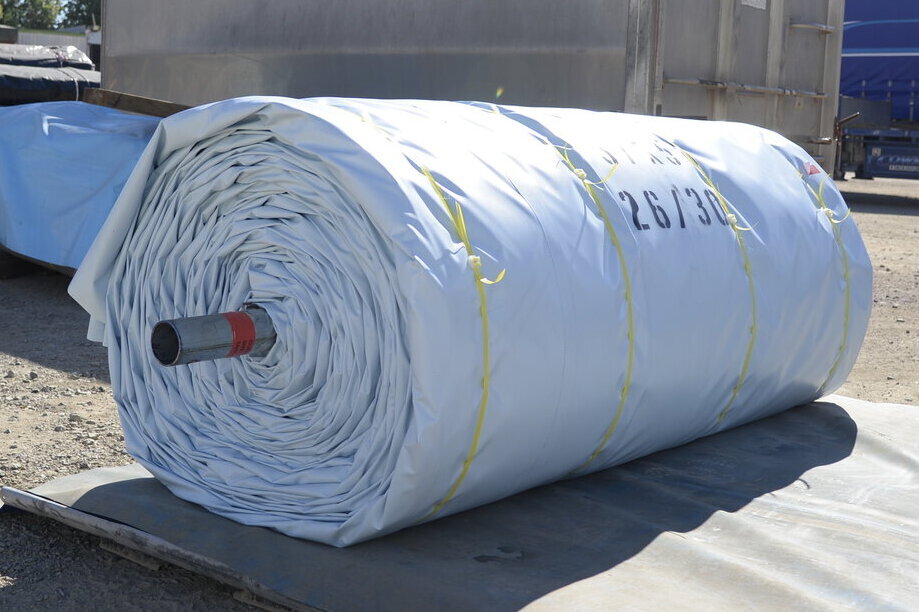
Our bunker covers are concertina-folded and rolled onto a steel or heavy-duty cardboard core, depending on the size and weight of the cover.
Position the roll at the filled end of the bunker and unroll it from the core across the width of the bunker pad. This creates a compact concertina stack, approximately two metres wide, ready to be pulled lengthwise down the bunker.
This method allows the cover to unfold progressively as it moves into position, without needing to lift or drag the full weight of the tarp.
2. Use the right equipment for larger covers
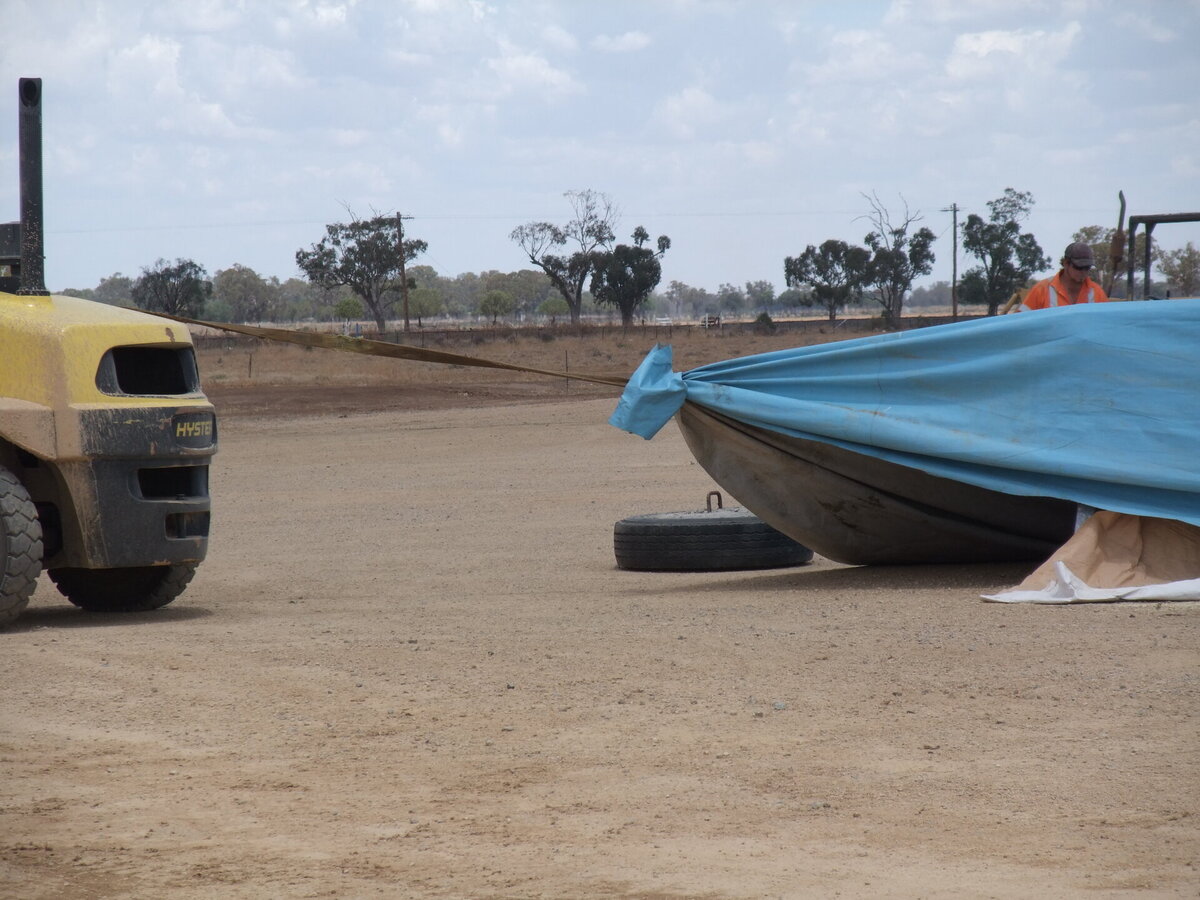
For larger bunker covers, using two machines, such as telehandlers, loaders or tractors, can make the job much easier.
Position one machine on either side of the bunker and use webbing straps or soft rope to pull the cover into place. Avoid using anything that could cut, snag or damage the tarp during installation.
Smaller covers may be manageable by hand, depending on their size and weight.
3. Keep the centre of the tarp elevated
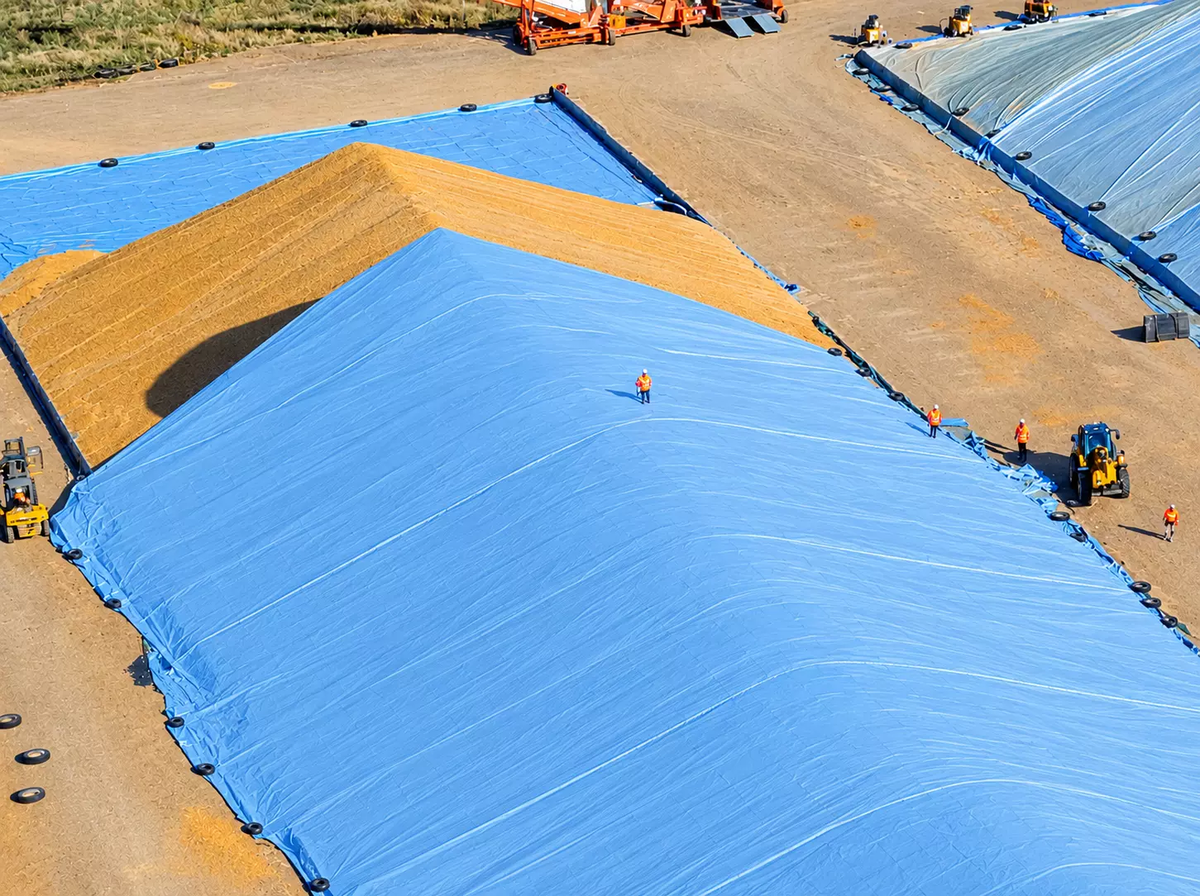
As the cover is pulled over, it may help to have a third person can walk along the centre ridge using a tarp puller to help keep the middle section elevated.
This helps prevent the cover from digging into the grain and allows it to move more smoothly into position.
4. Communicate clearly during installation
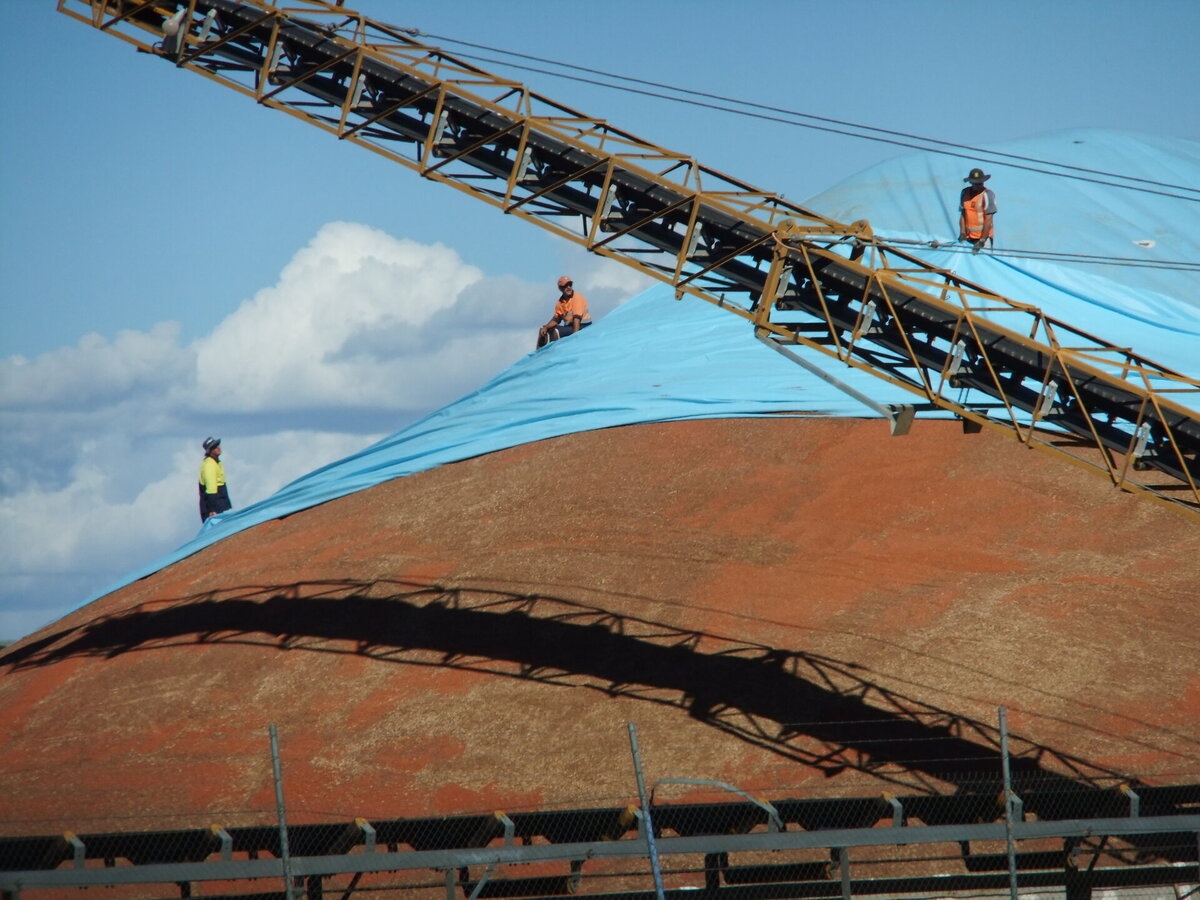
When multiple machines and people are involved, clear communication is essential.
Make sure operators and ground personnel can communicate effectively throughout the process, with everyone understanding when to stop if the cover catches or an adjustment is needed.
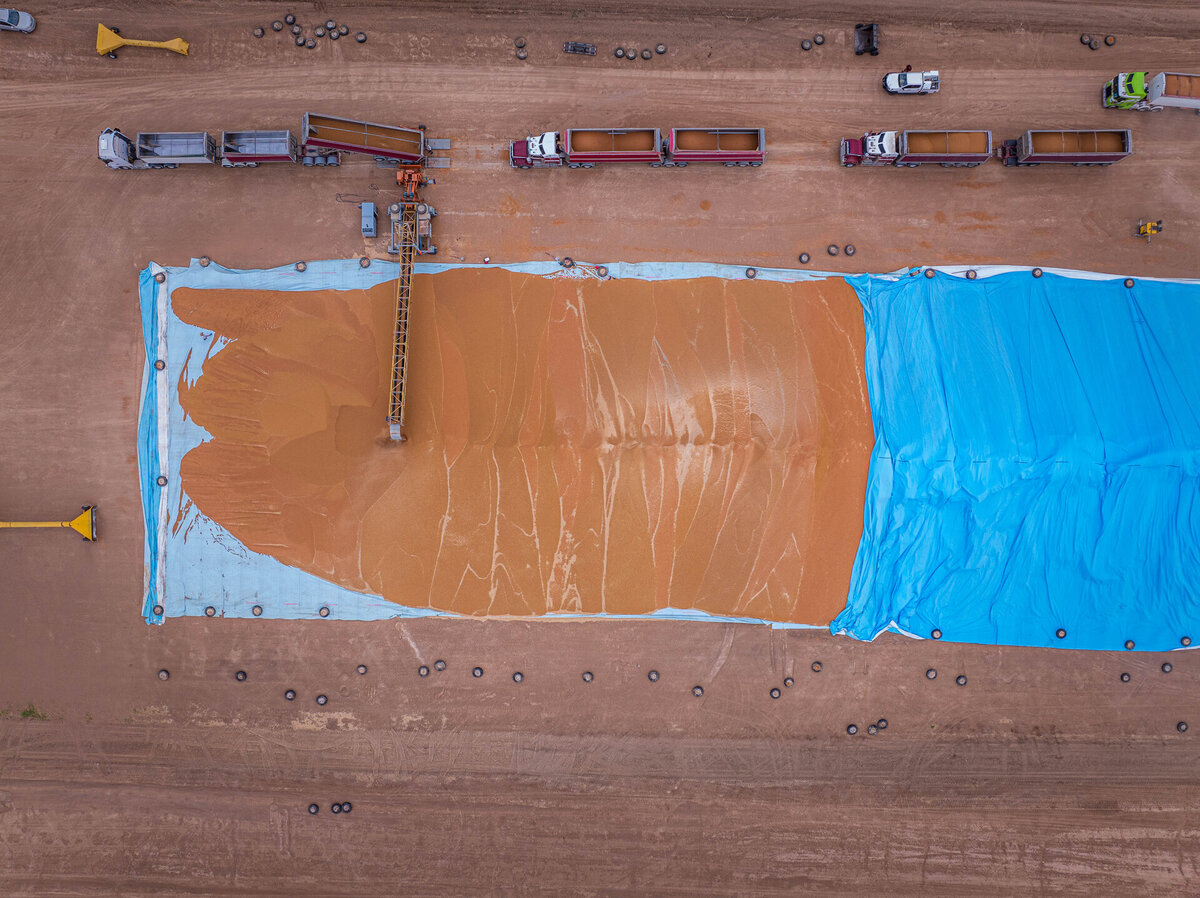
5. Don't wait until the bunker is completely full
You don't necessarily need to wait until filling is finished before starting to cover the bunker.
Where practical, installing the cover progressively during filling can help reduce the risk of grain being exposed to unexpected weather.
If the cover is left partially open for an extended period, make sure it is adequately secured with weights.
A little preparation goes a long way
Taking the time to plan the installation, use suitable equipment and handle the cover correctly can make pulling a bunker tarp over a much more straightforward job.
Need more grain storage advice? Our Grain Storage Guide covers everything from site selection and bunker sizing through to covering, securing and maintaining your grain. Click the link below to get your FREE copy today!
Download our Grain Storage Guide for practical information on preparing your bunker pad and planning your grain storage

Access our Grain Bunker Calculator
Need help to plan, prepare and calculate your grain storage accurately? Use our online grain bunker calculator to work this all out with ease in just a few simple steps!